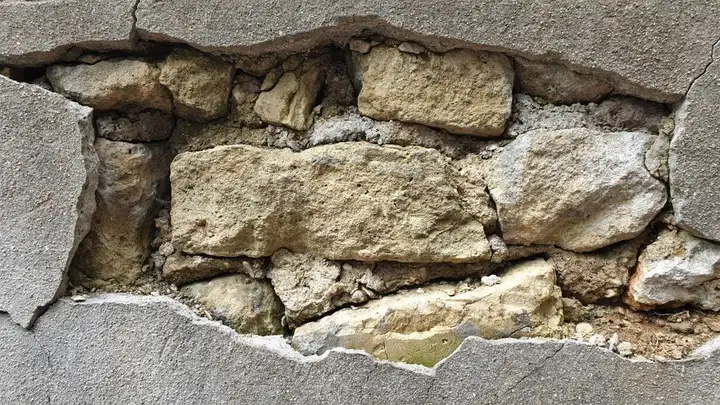
Foundation cracking in Newnan almost always comes down to one of two things: the Piedmont clay under your slab is expanding and contracting with moisture, or a pressurized water line beneath the slab is leaking and washing that soil away. The first is seasonal and slow. The second gets worse every month you ignore it, and it is the one that turns a hairline crack into a $12,000 repair.
We have crawled under Newnan homes from SummerGrove to Lake Redwine, and the pattern is consistent enough that we can usually tell you which one you are looking at before we pull a tool out of the truck. Here is how to figure out what is happening under your floor, what it costs to fix in 2026, and when a crack is telling you something a crack filler cannot solve.
Why is my foundation cracking in Newnan GA?
Foundation cracking in Newnan is caused by soil movement from North Georgia's expansive red clay, by a slab leak eroding the soil under your home, or by both at once. The clay is the baseline problem. The leak is the accelerant.
That distinction matters because the fixes are completely different. A soil-driven crack is a structural question. A leak-driven crack is a plumbing question, and no amount of foundation underpinning will stop it while water is still running under your slab.
Newnan sits on what geotechnical engineers call Piedmont residual soil - weathered clay with a high shrink-swell potential. In plain terms: when it is wet, it swells. When it dries, it shrinks. A slab poured on that clay is riding a surface that moves 1 to 3 inches between a wet March and a dry October. That is enough to crack tile, pop drywall seams, and open joints in the concrete itself.
Add a pinhole leak in a copper line under the slab and you have water saturating one small area of soil year-round. That spot swells while everything around it shrinks, and the differential movement concentrates stress along the nearest crack line. If you are trying to sort out whether your issue is plumbing or structural, slab leak repair newnan GA is where we start every diagnosis.
Foundation cracking causes in Newnan, Georgia
Foundation cracking causes in Newnan, Georgia break down into six categories, and most homes have two or three working at the same time.
Expansive clay soil
Coweta County clay can change volume by 6 to 10 percent between saturated and dry states. That is the single biggest driver of foundation movement in this area, and it is why homes built in the 1990s and 2000s along the Highway 34 corridor show more cracking than older homes on better-drained lots.
Slab leaks and under-slab pipe failures
A copper supply line running under your slab operates at 40 to 80 PSI, 24 hours a day. When it develops a pinhole - usually between year 15 and year 30 - it releases a steady trickle into the soil. You will not see it. You will see the crack it causes six months later.
Poor drainage and grading
Downspouts that dump within 3 feet of the foundation, or a lot graded back toward the house, keep the soil under one corner of your slab permanently wet. That corner heaves. The opposite corner settles. The crack opens diagonally across the slab.
Tree roots
A mature oak or pine pulls 50 to 100 gallons of water a day out of the soil. If it is within 20 feet of your foundation, it is drying out the soil under one side of your slab and causing settlement on that side.
Drought and heat cycles
Georgia's summer dry spells pull moisture out of the top 3 to 5 feet of clay. That is the zone your slab bears on. A dry August after a wet spring is when most new cracks show up.
Original construction issues
Thin slabs, missing vapor barriers, and inadequate rebar spacing all show up as cracking 10 to 20 years in. We see this most often in production-built subdivisions where the slab was poured fast.
Is foundation cracking a sign of a slab leak in Georgia?
Yes - a crack that appears or widens suddenly, especially alongside a warm floor spot or a rising water bill, is one of the most reliable signs of a slab leak in Georgia. But not every crack means a leak, and treating a soil crack like a plumbing problem wastes money.
Here is the pattern we look for. Soil-driven cracks tend to be stable. They open in late summer, close slightly in winter, and stay roughly the same width for years. Leak-driven cracks do the opposite: they keep growing, and they usually come with at least one of these companions:
- A water bill that jumped 20 to 40 percent with no change in usage
- A warm or hot spot on the floor - that is a hot water line leaking under the slab
- The sound of running water when every fixture in the house is off
- Musty smell or damp carpet at the base of a wall
- Baseboards or flooring that have started to lift or cup
- A crack that runs diagonally across tile or vinyl, not just along a grout line
If you have two or more of those, stop patching the crack and find the leak. Our team handles slab leak detection newnan GA with electronic and acoustic equipment, which means we can pinpoint the break to within a few inches before anyone cuts concrete.
How to tell a slab leak crack from a soil crack
You can run a basic check yourself in about 20 minutes before you call anyone. It will not replace professional detection, but it will tell you how urgently you need to act.
- Shut off every fixture in the house. No faucets, no ice maker, no irrigation, no washing machine.
- Find your water meter - usually near the curb or in a concrete box at the property line.
- Watch the leak indicator (the small triangle or dial) for 10 minutes. If it moves, water is flowing somewhere it should not.
- Note the crack pattern. Vertical hairline cracks in a slab are usually cosmetic. Diagonal cracks, stair-step cracks, and cracks wider than 1/8 inch are the ones that matter.
- Check the floor temperature with your hand along the crack. A warm strip means a hot water line is leaking beneath it.
If the meter moves and the crack is wider than a credit card, you have a leak. If the meter is dead still and the crack has not changed in two years, you are looking at soil movement and should be talking to a foundation contractor, not a plumber.
How to fix foundation cracking from a slab leak in Newnan GA
Fixing foundation cracking from a slab leak in Newnan GA means locating the break, repairing or rerouting the pipe, and then restoring the slab - in that order. Skipping the detection step is how homeowners end up paying twice.
Here is what the process actually looks like when we run it.
Step 1: Pinpoint the leak
We use three tools together. electronic leak detection newnan GA picks up the electrical signal of water escaping a pressurized line. Acoustic equipment listens for the hiss of the break. Thermal imaging shows the temperature signature of a hot water leak on the slab surface. Together they get us within inches, which means one small cut instead of exploratory demolition.
Step 2: Repair or reroute the pipe
If the break is accessible and the pipe is otherwise sound, we repair it in place. If the line is 25-plus years old copper with multiple pinholes, repairing one spot just moves the problem 4 feet down the line. In that case, under slab pipe rerouting newnan GA runs a new line overhead through the attic or along a wall cavity and abandons the failing section under the slab. No more concrete cutting, and no more leaks from that line.
Step 3: Restore the slab
Once the pipe is fixed and pressure-tested, we pour back the concrete and finish it to match. concrete replacement after slab leak repair newnan GA is the last step, and it is the one that determines whether you notice the repair six months later. We match depth, aggregate, and finish so the patch disappears under your flooring.
What it costs in 2026
Typical 2026 pricing in this area runs $350 to $700 for detection, $1,200 to $3,500 for a spot repair through a small slab opening, and $4,500 to $9,000 for a full reroute on a larger home. Slab restoration adds $600 to $2,000 depending on square footage and finish. If you have already had a foundation contractor quote you $15,000 for underpinning, get the leak checked first - we have walked into homes where the entire problem was one $1,800 pipe repair.
What to watch out for
The most expensive mistake we see in Newnan is a homeowner who lets a foundation company inject piers before anyone confirms whether water is running under the slab. Piers stabilize the structure. They do nothing about the leak that caused the movement, and the crack reopens within two years.
Other things that cost people money:
- Cosmetic crack filler on an active leak. Epoxy injection looks great for about eight months. Then the water finds the next weak point.
- Ignoring a small water bill increase. A pinhole leak at 1 gallon per hour is 720 gallons a month - roughly $15 to $25 on your bill. That is the cheapest warning you will ever get.
- Cutting concrete before detection. We have seen three separate 4-foot square cuts in one living room because nobody pinpointed the leak first.
- Assuming all copper is fine. Newnan homes built between 1985 and 2005 have copper with a known pinhole failure window. If yours is in that range and you have had one leak, expect more.
- Letting a slow drain line leak sit. A drain line repair newnan GA issue under the slab corrodes the soil and the pipe together. It is a smaller job now than it will be in a year.
When to call a professional
Call us when the water meter moves with everything off, when a crack is wider than 1/8 inch, when you have a warm spot on the floor, or when your water bill has climbed without explanation. Those four signals mean water is moving under your slab right now.
At Leak Fix Pro, we run detection first and tell you exactly what we found before any concrete gets cut. If it is a pipe, we fix the pipe. If it turns out to be soil movement and nothing else, we will tell you that too, and point you toward the right trade. We would rather lose a job than sell you a repair you do not need.
Frequently Asked Questions
Why is my foundation cracking in Newnan GA?
Most Newnan foundation cracks come from expansive Piedmont clay that swells when wet and shrinks when dry, or from a slab leak eroding soil under the foundation. Soil movement causes slow, seasonal cracks. A leak causes cracks that keep widening and usually comes with a higher water bill.
What causes foundation cracking in Newnan?
The top causes are shrink-swell clay soil, under-slab copper pinhole leaks, poor grading and downspout drainage, tree roots within 20 feet of the foundation, summer drought cycles, and original construction issues like thin slabs or missing vapor barriers. Most homes have two or more of these at once.
Is foundation cracking a sign of a slab leak in Georgia?
Sometimes. A crack that widens over months, paired with a rising water bill, a warm floor spot, or the sound of running water with fixtures off, is very likely a slab leak. Stable hairline cracks that open and close with the seasons are usually soil movement instead.
How to repair foundation cracks in Newnan GA?
First confirm whether a leak is present - a 10-minute water meter test tells you a lot. If a leak is found, we pinpoint it, repair or reroute the pipe, pressure-test, and pour the slab back. If no leak exists, the crack is structural and needs a foundation contractor.
Who to call for foundation cracking in Newnan?
Call a slab leak specialist first if you have any plumbing symptoms - meter movement, warm floors, or a high water bill. Leak Fix Pro handles detection, pipe repair, and slab restoration in Newnan. If the crack is purely structural, we will tell you and refer you to a foundation contractor.
Get help with slab leak repair in Newnan
If your foundation is cracking and you suspect water is involved, we can pinpoint the source and give you a straight answer the same day. Call Leak Fix Pro at (470) 587-8457 and we will get a technician out to your Newnan home.