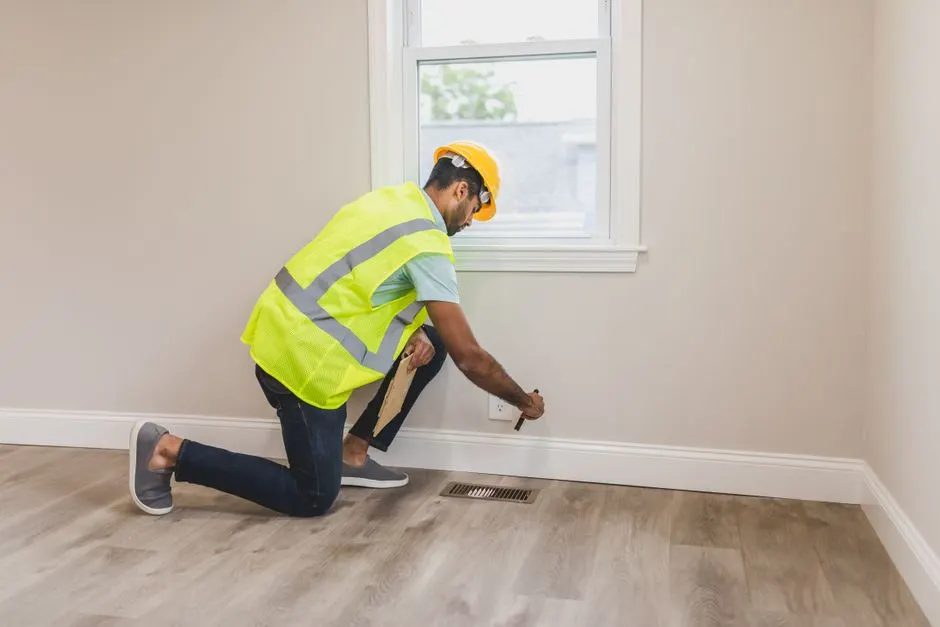
If one spot on your floor is noticeably warmer than the rest - warm enough that you notice it barefoot - the most likely cause is a hot water line leaking under your slab. The hot water escapes the pipe, saturates the soil or concrete beneath your flooring, and radiates heat upward through the slab. In Newnan, where thousands of homes sit on post-tension or conventional slabs built from the 1980s through the 2000s, this is one of the most common calls we run. The rest of this post walks through every possible cause, how to narrow it down, and what to do next.
Why does my floor feel hot in one spot in Newnan, Georgia?
A hot spot on your floor in Newnan is almost always a hot water slab leak until proven otherwise. The warm water travels through the soil under your foundation and heats the concrete above it, which is why the warmth is concentrated in a patch the size of a dinner plate or a bath mat rather than spread across the room.
Slab leak hot floor Newnan GA is a specific pattern: the spot is warm to the touch, often near a bathroom, kitchen, or water heater closet, and it does not cool down when you turn off the HVAC. If your floor feels hot in one spot in Newnan, Georgia, and the rest of the house is normal temperature, you are looking at a below-slab issue roughly nine times out of ten.
Here is the definitional version: a slab leak is a breach in a water or drain line that runs beneath your home's concrete foundation, and it is the leading cause of a localized hot spot on a slab floor.
The most common cause: a hot water slab leak
Hot water lines under a slab are under constant pressure and constant thermal expansion. Every time your water heater cycles, the copper or PEX line beneath your floor heats up, expands slightly, and cools back down. Over 15 to 30 years, that cycle wears on the pipe.
In Newnan, we see three failure modes most often:
- Copper pinhole leaks - tiny pinholes worn through the pipe wall by aggressive water chemistry and decades of expansion. These start small and grow.
- Joint failures - soldered elbows and tees that crack or corrode where the pipe meets the fitting.
- Abrasion against rebar or gravel - the pipe rubs against a sharp edge under the slab until it wears through.
When the leak is on the hot side, the water escaping is 110 to 130 degrees Fahrenheit. That heat has nowhere to go but up through your slab and flooring. A tile floor over a hot water leak can read 85 to 95 degrees on an infrared thermometer while the rest of the room sits at 72.
If you have already noticed a spike in your water bill alongside the warm spot, that is a strong confirmation. A hot water slab leak typically adds 2,000 to 8,000 gallons per month to a household's usage, depending on the size of the breach.
Other causes of a hot spot on your floor
Not every warm patch is a slab leak. Before you assume the worst, rule out these alternatives.
HVAC ductwork running under the floor
In homes with a crawlspace or a basement, a heating duct can run directly beneath a section of flooring. If that duct has a leak, a disconnected joint, or missing insulation, it dumps heat into one spot. This is more common in older Newnan homes with original ductwork from the 1970s and 1980s.
Electrical wiring or a failing outlet
A warm spot near a wall, outlet, or appliance can be an electrical issue. If the warmth is directly above or beside an outlet, switch, or floor-mounted receptacle, stop using that circuit and have an electrician look at it. Electrical heat smells like hot plastic or burning; slab leak heat smells like damp concrete or nothing at all.
Radiant floor heating
If your home has hydronic or electric radiant floor heating, a stuck zone valve or a failed thermostat can leave one loop running continuously. This is the easiest cause to rule out - just check your thermostat and zone controls.
Sun exposure through a window or skylight
A south- or west-facing window can concentrate sunlight on one patch of floor for several hours a day, especially in winter when the sun angle is low. This is harmless. If the spot disappears after sunset, it is not a slab leak.
How to tell if it is a slab leak and not something else
You can narrow this down yourself in about 20 minutes before calling anyone.
- Shut off the water heater. Turn off the breaker or gas valve to your water heater and let it sit for two hours. If the spot cools down, you have a hot water slab leak. If it stays warm, the heat is coming from something else.
- Check your water meter. With every fixture in the house off, watch the low-flow indicator on your meter. If it is spinning, you have an active leak somewhere on the system.
- Feel for moisture. A slab leak often brings dampness with it. Press a paper towel against the grout lines or seams near the hot spot. If it wicks up moisture, the leak is confirmed.
- Look for other signs. Buckling laminate, cupping hardwood, a musty smell, or a hairline crack in the tile above the spot all point to a below-slab leak.
If two or more of those checks come back positive, you are almost certainly dealing with a slab leak hot floor Newnan GA homeowners call us about every week. The next step is professional slab leak detection newnan GA - we use acoustic listening equipment and thermal imaging to pinpoint the exact location before anyone touches your floor.
What to do if your floor feels hot in one spot
Here is the sequence we recommend, in order:
- Shut off the water heater. This stops the heat source and slows the damage. You can still use cold water in the house.
- Shut off the main water valve if you see active water. If the spot is wet or you hear running water under the floor, kill the main.
- Do not pull up flooring yet. You will destroy material you may not need to replace. Let a technician locate the leak first.
- Call a slab leak specialist. A general plumber can confirm the leak, but pinpointing it without breaking concrete takes specialized equipment.
- Document everything. Photograph the hot spot, your water bill, and any moisture or damage. If you file an insurance claim, this matters.
Once we locate the leak, we have three repair paths. For a single accessible breach, we do under slab pipe repair newnan GA through a small access point. For pipes that are failing in multiple places, rerouting the line overhead is often cheaper long-term. And for homes with recurring copper failures, we frequently recommend PEX repiping newnan - PEX does not pit or corrode the way copper does in Newnan's water.
Typical 2026 pricing in this area runs $800 to $2,500 for detection and a targeted repair, and $4,000 to $9,000 for a full reroute with concrete restoration. We give you the number before we start.
Common mistakes homeowners make with a hot floor spot
We have seen every version of this. These are the ones that cost people the most money.
- Ignoring it because the floor is not wet. A hot water leak can run for months without surfacing. The heat is the warning, not the water.
- Breaking concrete to find the leak. Without detection equipment, you are guessing. We have seen homeowners jackhammer three wrong spots before calling us.
- Turning up the AC to compensate. This masks the symptom and runs your power bill up while the leak keeps growing.
- Assuming insurance will cover it. Most Georgia homeowner policies cover sudden and accidental slab leaks, but not long-term seepage. Waiting hurts your claim.
- Hiring the cheapest quote without detection. A repair without proper location is a repair that fails in six months.
When to call a professional
Call us the same day you confirm the hot spot is not sun or HVAC. A slab leak does not stop on its own, and the longer it runs, the more concrete, flooring, and foundation it damages.
Our team handles the whole job - detection, repair, and putting your floor back the way we found it. We work across Newnan and the surrounding areas, including neighborhoods like slab leak repair newnan GA customers call us from every week in Heritage Ridge, SummerGrove, and White Oak. If you are in one of the older brick ranches off Greenville Street or a newer build near the Ashley Park area, we have worked on your slab type before.
We also handle the less common culprits when they turn up during an inspection - a water heater leak repair newnan GA that has been dripping under a closet, or a foundation leak repair newnan GA where the slab edge is wicking water. One visit, one diagnosis, one plan.
Frequently Asked Questions
Why does my floor feel hot in one spot in Newnan, GA?
A hot water line leaking under your slab is the cause in roughly 9 out of 10 cases. Hot water escapes the pipe, heats the soil and concrete beneath your floor, and radiates upward. Turn off your water heater for two hours - if the spot cools, that confirms it.
What causes a hot spot on the floor in Newnan?
Four things cause a localized hot spot: a hot water slab leak, a leaking HVAC duct beneath the floor, electrical wiring overheating near an outlet, or concentrated sunlight through a window. Slab leaks are by far the most common in Newnan's slab-on-grade housing stock.
Is a hot floor a sign of a slab leak in Georgia?
Yes, in most cases. Georgia's clay-heavy soil holds moisture against the pipe and accelerates corrosion, and our water chemistry is hard on copper. If the spot stays warm after you shut off the water heater, you have a hot water slab leak.
How do I fix a hot floor spot in Newnan, GA?
First, shut off the water heater and confirm the leak. Then call a slab leak specialist for detection - we pinpoint the breach with acoustic and thermal equipment, then repair it through a small access point or reroute the line. Most repairs are done in one to two days.
Who should I call for a hot floor spot in Newnan?
Call a licensed slab leak repair company, not a general handyman. Leak Fix Pro serves Newnan and the surrounding Coweta County area. We detect, repair, and restore the floor. Reach us at (470) 587-8457.
Get help with slab leak repair in Newnan
A hot spot on your floor is your slab telling you something is wrong underneath it. We find the leak, fix it, and test the line before we leave - no guesswork, no unnecessary concrete work.
Call Leak Fix Pro at (470) 587-8457 and we will get a technician out to your Newnan home to pinpoint the source and give you a straight answer on the repair.